Eat the Rainbow
A varied diet rich in whole foods provides all essential vitamins. Strategic food pairings enhance absorption and bioavailability.
Last updated:
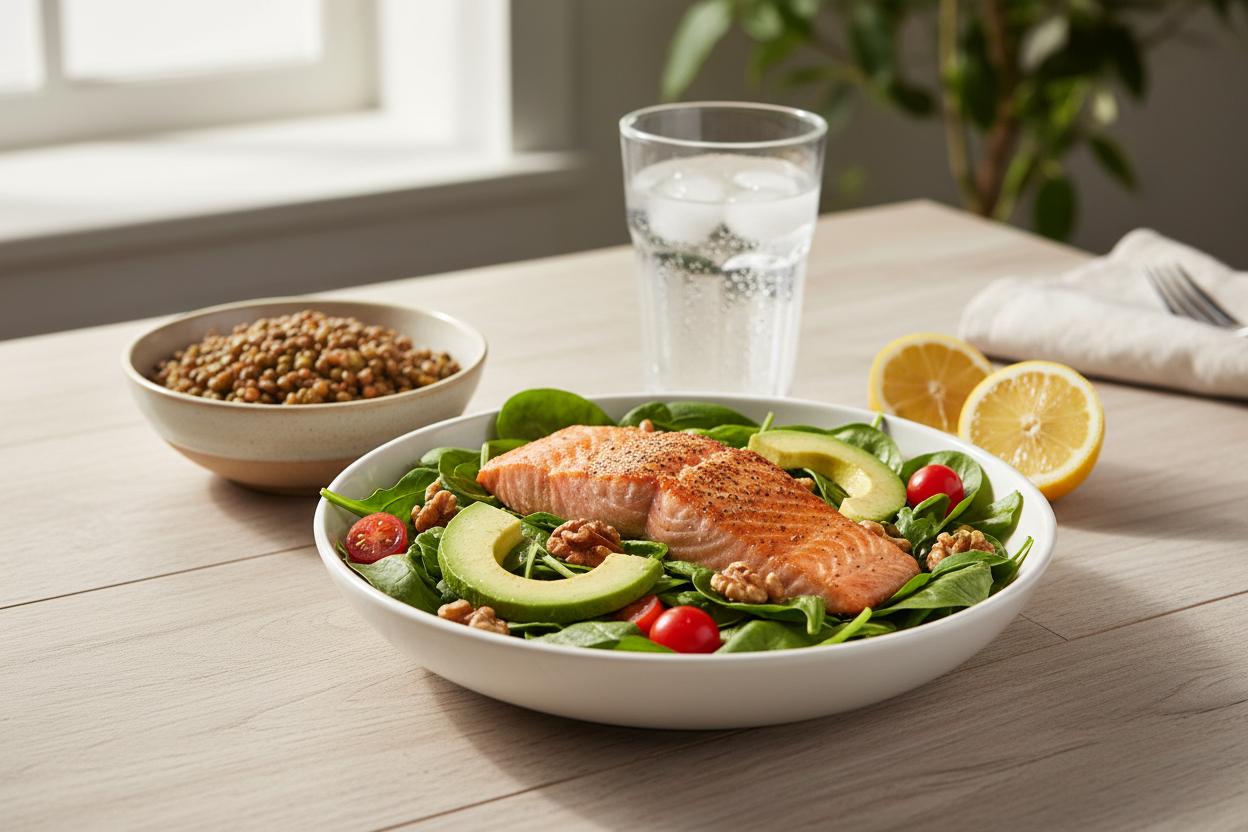
A balanced meal with salmon, leafy greens, avocado, and nuts provides vitamins A, B, C, D, E, and K.
Pair Fat with Fat-Soluble Vitamins
Add olive oil to spinach salad to boost absorption of vitamins A and K. Healthy fats are essential for absorbing vitamins A, D, E, and K.
Vitamin C Enhances Iron Absorption
Squeeze lemon on lentil dishes or pair bell peppers with iron-rich plant foods. This combination is especially valuable for vegetarians.
Steam, Don't Boil
Steaming preserves 60-90% of vitamin C compared to boiling which can destroy over 50%. Microwaving is even better at 85-90% retention.
Freeze to Preserve Nutrients
Frozen vegetables often retain more vitamins than produce stored for weeks in the fridge. Blanching before freezing inactivates degrading enzymes.
Cook Briefly, Eat Fresh
Keep cooking times short. Raw or lightly cooked vegetables preserve the most nutrients. Store cut produce in airtight containers.
Store Properly
Vitamin C degrades with light and air. Keep milk opaque, store produce cool, and consume fortified cereals within their best-by date.
Best Food Sources by Vitamin
Select a vitamin to see top food sources ranked by content per serving. Data is approximate and varies by preparation method.
| Food | Serving Size | Vitamin Amount | % RDA |
|---|---|---|---|
| Beef liver | 3 oz (85g) | 6,582 mcg | 731%Too Much |
| Sweet potato | 1 medium | 1,403 mcg | 156%Too Much |
| Carrots | 1/2 cup | 665 mcg | 74%OK |
| Spinach | 1/2 cup cooked | 573 mcg | 64%OK |
| Kale | 1/2 cup cooked | 443 mcg | 49%Not Enough |
| Cod liver oil | 1 tsp | 1,350 mcg | 150%Too Much |
| Eggs | 2 large | 160 mcg | 18%Not Enough |
| Mango | 1 cup | 89 mcg | 10%Not Enough |
| Cantaloupe | 1 cup | 270 mcg | 30%Not Enough |
| Red bell pepper | 1/2 cup | 117 mcg | 13%Not Enough |
All Vitamins at a Glance
| Food | Top Sources | RDA (Adults) |
|---|---|---|
| Vitamin A | Liver and fish oils, Eggs and dairy products, Carrots and sweet potatoes | 900 mcg (3,000 IU) |
| Vitamin D | Fatty fish (salmon, tuna, mackerel), Egg yolks, Fortified milk and orange juice | 15 mcg (600 IU) age 19-70 |
| Vitamin E | Wheat germ oil, Sunflower and safflower oil, Almonds and sunflower seeds | 15 mg (22 IU) |
| Vitamin K | Kale, spinach, and collard greens, Broccoli and Brussels sprouts, Natto (fermented soybeans) | 120 mcg |
| Vitamin B1 | Pork and organ meats, Whole grains and legumes, Fish and seafood | 1.2 mg |
| Vitamin B2 | Dairy products and eggs, Lean meats and organ meats, Almonds and mushrooms | 1.3 mg |
| Vitamin B3 | Poultry, beef, and fish, Peanuts and mushrooms, Brown rice and fortified cereals | 16 mg |
| Vitamin B5 | Chicken, turkey, and beef, Potatoes and oats, Tomatoes and eggs | 5 mg |
| Vitamin B6 | Poultry, fish, and organ meats, Potatoes and chickpeas, Bananas and fortified cereals | 1.3 mg (ages 19-50) |
| Vitamin B7 | Egg yolks and liver, Nuts and seeds, Salmon and avocado | 30 mcg |
| Vitamin B9 | Dark leafy greens (spinach, kale), Legumes (lentils, chickpeas), Asparagus and avocado | 400 mcg |
| Vitamin B12 | Meat, poultry, and fish, Eggs and dairy products, Clams and organ meats | 2.4 mcg |
| Vitamin C | Citrus fruits (oranges, lemons, grapefruit), Strawberries and kiwi, Bell peppers (especially red) | 90 mg |